
Driving Knowledge and Innovation in the Digitalisation of the Water Cycle

Driving Knowledge and Innovation in the Digitalisation of the Water Cycle
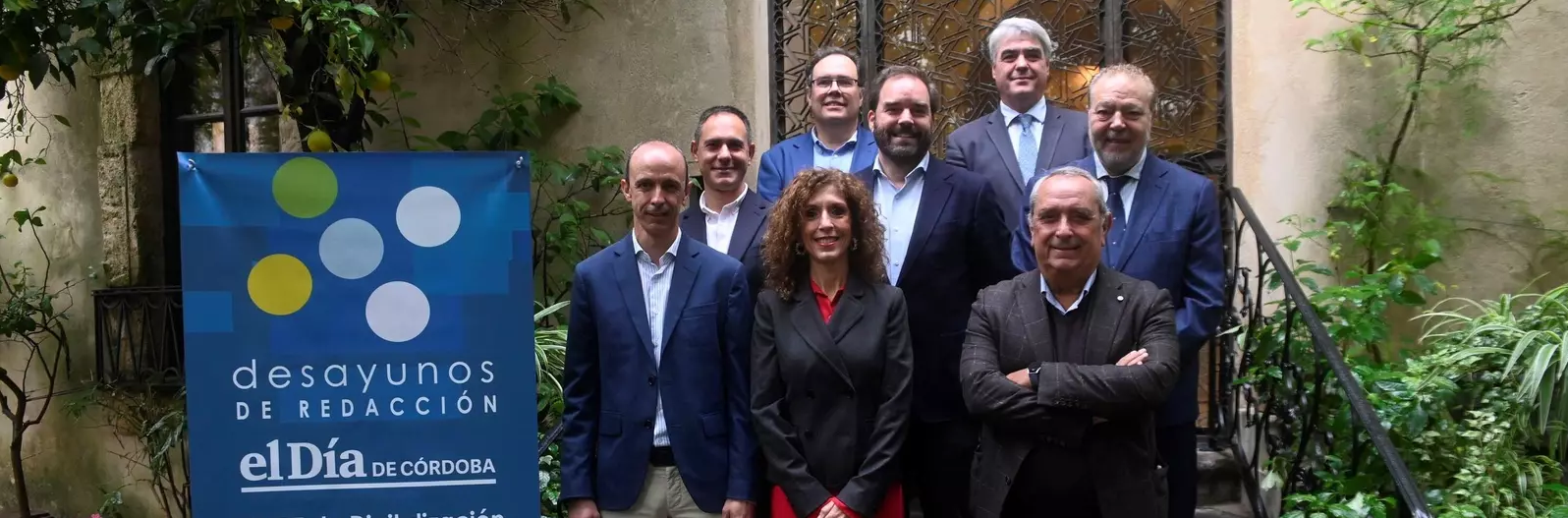
At a key moment for water transformation, Magtel is driving knowledge and innovation in the digitalisation of the water cycle alongside leading operators in a meeting promoted by Grupo Joly with our collaboration.
During the event, Manuel García Lláser, Magtel’s General Director, highlighted the company’s strategic role, explaining that Magtel not only provides the necessary technological infrastructure but also aims to transform data into intelligent services for citizens. Among its possibilities are the creation of personalised consumption patterns, alert systems for vulnerable households, and the integration of water with other elements of home automation.
Magtel’s experience in digitalisation projects, such as those developed with water supply companies to modernise networks using GIS technology, smart sensors, and remote control systems, reinforces its position as a technical benchmark, technology partner, and key ally for the public sector.
The meeting underscored the need for close collaboration between administrations, technology companies, and knowledge centres to achieve modern, efficient, and sustainable water management. In this context, Magtel’s role is consolidated as essential to making the digitalisation of the water cycle a reality that benefits both public management and citizens.
Operators’ Actions
Pedro Escribano Rodríguez, Area Manager in Córdoba for the Guadalquivir River Basin Authority (CHG), explained that the organisation is managing a significant investment aimed at digitalising hydraulic management. Key actions include the digitalisation of files, updating the Automatic Hydrological Information System (SAIH) and the land registry, integrating the account with the national water register, and implementing digital meters with real-time measurement. He also announced future work lines based on advanced territorial monitoring and alarm systems supported by artificial intelligence.
Next, Manuel López Zamorano, Provincial Coordinator for Water at the Andalusian Regional Government, stressed the importance of the PERTE initiative to provide reliable data for prioritising investments and improving supply in the 49 beneficiary municipalities in the province.
From the University of Córdoba, Professor María Ángeles Martín Santos highlighted the challenge of managing the vast amount of information generated by digitalised systems and insisted on the need to develop new sensors for reservoirs and treatment plants, as well as analytical tools capable of processing this data effectively and accurately to improve decision-making.
Meanwhile, Juan Antonio Durán Molina, Manager of Córdoba’s Municipal Water Company (EMACSA), detailed the progress made after decades of incorporating technology into its processes. The entity was a pioneer in the use of remote control in the 1990s and is now facing a key process: the creation of a unified control centre that brings together remote management, security, remote control, and its renewed Geographic Information System (GIS). Durán explained that almost 70% of the network already has remote-reading meters and that 100% is digitalised in GIS, with one of the objectives being to bring the same level of digitalisation to rural areas such as Santa Cruz or Cerro Muriano.
Finally, Manuel Martín Bernal, Manager of Emproacsa, stated that the provincial company has already digitalised around 20% of its infrastructure thanks to remote measurement systems in tanks linked to reservoirs such as Iznájar, Sierra Boyera, and Martín Gonzalo, and indicated that the main priority is to advance in network digitalisation with GIS support and, above all, to deploy remote reading in rural areas.

Magtel launches its real estate development activity with Residencial Montesol, an exclusive project in Córdoba

Magtel Executes a New Boulevard in the Southern Area of Alcalá de Guadaíra


